
Genetic composition of a good Colt and a good filly.
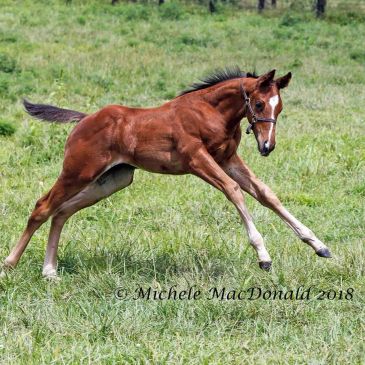
Pedigree of a good Colt.
Pedigree of a good filly.
Pedigree of a good filly.
THE COLT - XY
What Makes a Good Colt's Pedigree
A well-built pedigree for a colt shows depth of duplication on both sides of the family tree — and crucially, that duplication needs to be balanced across sexes.
Look for many sons and daughters of duplicated stallions appearing in each half of the pedigree (both the sire's side and the dam's
THE COLT - XY
What Makes a Good Colt's Pedigree
A well-built pedigree for a colt shows depth of duplication on both sides of the family tree — and crucially, that duplication needs to be balanced across sexes.
Look for many sons and daughters of duplicated stallions appearing in each half of the pedigree (both the sire's side and the dam's side). This tells you that a particular stallion's influence has been reinforced through multiple descendants, not just a single narrow line.
Alongside this, a good colt should carry two or more sons of duplicated dams in each half of the pedigree. Where a mare's male-line descendants are duplicated on both sides, it signals that her genetic contribution has been transmitted and reinforced through the sons who carried it forward.
Beyond the duplications themselves, a strong colt pedigree will also be densely packed with siblings within eight generations — full or half-siblings to the horses already duplicated in the pedigree, clustering the same core family influence from multiple angles rather than relying on a single individual.
The key principle throughout is sex-balance. It isn't enough to simply have duplicated ancestors — the duplication needs to appear through both male and female descendants, on both sides of the pedigree. This sex-balanced patterning is one of the strongest indicators of a well-constructed, resilient pedigree.
Every Thoroughbred inherits approximately half of its nuclear DNA from its sire and half from its dam. However, a colt and a filly do not inherit their sex chromosomes in the same way — creating important differences when analyzing their future racing potential and breeding strategies. Understanding these pathways is fundamental to serious pedigree analysis. THE COLT — XY A colt receives an X chromosome from his dam and a Y chromosome from his sire. The Y chromosome is passed directly from father to son, establishing the traditional sire-line pathway through the male population. A colt can transmit his Y chromosome only to his sons, while his daughters receive his X chromosome instead, which entirely comes from his mother. This underlines the importance of broodmare pedigree in assessing X-linked inheritance in a colt, particularly regarding theories like the Large Heart Factor. A colt therefore embodies a fascinating combination of: Sire → Y chromosome → direct male-line inheritance Dam → X chromosome → maternal inheritance. Beyond the sex chromosomes, the colt inherits the majority of his remaining nuclear genome through a mix of both parents, with recombination creating a unique genetic individual. These factors contribute to elite horse genetics and provide insights into the pedigree of a colt.
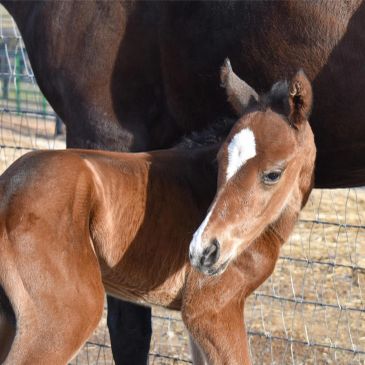
Pedigree of a good filly.
Pedigree of a good filly.
Pedigree of a good filly.
THE FILLY — XX
What Makes a Good Filly's Pedigree
For a filly, the same principle of sex-balanced duplication applies, but the emphasis shifts.
A good filly pedigree will show both sons and daughters of duplicated dams appearing on each side of the pedigree. Because a mare passes her genetic influence forward regardless of the sex of her o
THE FILLY — XX
What Makes a Good Filly's Pedigree
For a filly, the same principle of sex-balanced duplication applies, but the emphasis shifts.
A good filly pedigree will show both sons and daughters of duplicated dams appearing on each side of the pedigree. Because a mare passes her genetic influence forward regardless of the sex of her offspring, seeing this influence reinforced through both sons and daughters, on both the sire's and dam's side, is a strong marker of quality.
She should also carry many daughters of duplicated stallions in each half of the pedigree. Where a stallion's influence has been carried forward and reinforced specifically through his daughters, on both sides of the family, it reflects a well-established, transmissible line of quality.
As with colts, a strong filly pedigree will include as many siblings as possible clustered within eight generations, reinforcing the same core families from multiple related individuals rather than a single isolated horse.
Sex-balanced duplication remains critically important. The strength of a filly's pedigree lies not just in how often key ancestors are duplicated, but in whether that duplication comes through a balanced mix of male and female descendants across both halves of her family tree.
A filly receives an X chromosome from both parents — one from her sire and one from her dam. Her sire's X chromosome is inherited from his dam, creating an important pathway for tracing X-linked ancestry through the pedigree. This process holds significant relevance for analyzing the broodmare pedigree, as her maternal X chromosome also comes from her dam, whose own X chromosomes are inherited from both her parents. For breeding purposes, this makes the filly particularly interesting because she can transmit an X chromosome to both sons and daughters. Her genetic architecture is vital in carrying forward important maternal and paternal influences into future generations, which is essential for elite horse genetics. WHY THIS MATTERS TO BREEDING The distinction between the genetic pathways of a colt and a filly is crucial when analyzing future breeding value. A colt's direct paternal Y chromosome follows the father-to-son sire line, while his X chromosome comes from his dam, which is integral to the pedigree of a colt. A filly does not receive a Y chromosome; instead, she receives two X chromosomes, allowing her to transmit X-linked genetic material through both male and female offspring. This is one reason why the tail-female line, maternal family, and transmission of influential mares are such important components of our analysis.
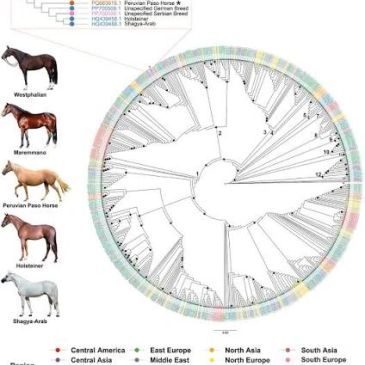
MTDNA
Pedigree of a good filly.
MTDNA
THE MITOCHONDRIAL CONNECTION
Why is the Mitochonria important?
There is another maternal pathway that deserves attention: mitochondrial DNA (mtDNA). Mitochondria are the structures within cells responsible for producing much of the energy required by the body. Unlike nuclear DNA, mitochondrial DNA is inherited almost exclusively through the
THE MITOCHONDRIAL CONNECTION
Why is the Mitochonria important?
There is another maternal pathway that deserves attention: mitochondrial DNA (mtDNA). Mitochondria are the structures within cells responsible for producing much of the energy required by the body. Unlike nuclear DNA, mitochondrial DNA is inherited almost exclusively through the dam. Consequently: Dam → Daughter → Granddaughter → Great-granddaughter represents the continuous mitochondrial inheritance pathway. This does not mean that mitochondrial DNA determines racing ability. Athletic performance is enormously complex and involves many genes and environmental factors. Nevertheless, maternal mitochondrial inheritance is another reason to examine the quality and continuity of the tail-female line in a broodmare pedigree, as this can play a pivotal role in elite horse genetics. THE COMPLETE GENETIC PICTURE The most important principle is that no single chromosome, ancestor, statistic, or pedigree pattern determines whether a Thoroughbred will become a champion. A successful racehorse is the result of an extraordinarily complex interaction between its nuclear genome, sex chromosomes, mitochondrial inheritance, physical development, environment, training, and opportunity. Our analysis, therefore, considers the colt or filly as a complete genetic proposition, looking not only at the pedigree of a colt but also at the sire line, maternal line, X and Y chromosome pathways, mitochondrial ancestry, influential ancestors, linebreeding, inbreeding, Dosage, LBI, female families, and physical characteristics. Because ultimately, the objective is not simply to understand where a horse came from. It is to understand what that genetic architecture may have the potential to become.